
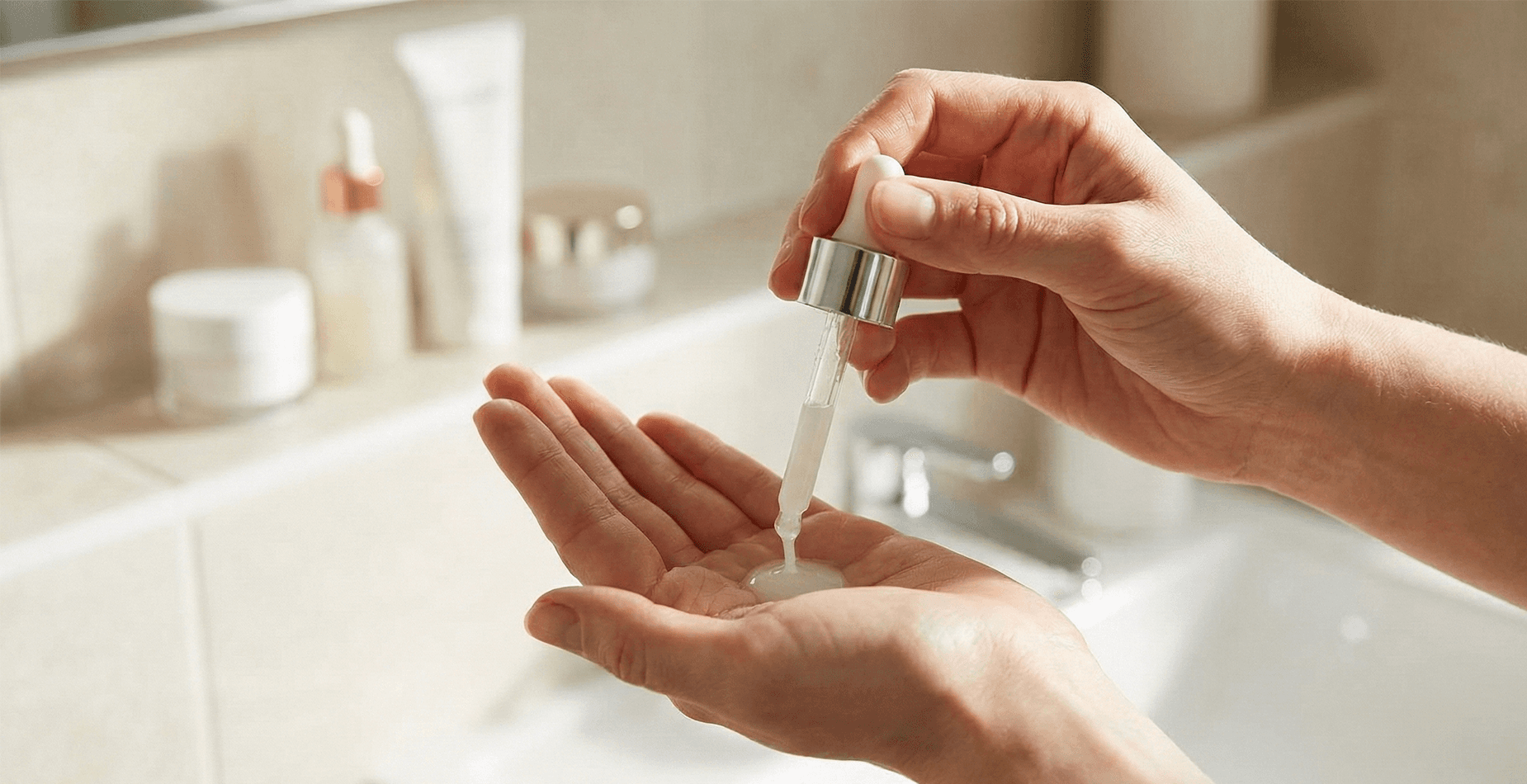
At 46, my skincare routine has come full circle. From pandemic shopping sprees to a stripped-back "skin barrier recovery" phase, and now to what I call "informed maximalism." Here's what five years of trial, error, and a lot of empty bottles taught me about what mature skin actually needs.
I use more than 20 skincare products right now. Twelve steps in my morning routine. Twelve at night.
Let me be clear: this isn't where I started. In 2019 I was washing my face with Cetaphil, using Ponds Dry Skin Cream (yes the one our grandmas swore by) and I was calling it skincare. Then 2020 happened, and like millions of other women stuck at home with nothing but time and a Wi-Fi connection, I fell headfirst into the skincare rabbit hole.
What followed was a predictable disaster. A compromised skin barrier, a medicine cabinet full of products I didn't understand, and the eventual pendulum swing to extreme minimalism. For two years, I used exactly four products. Tretinoin. Moisturizer. Vitamin C. SPF. That's it.
But here's the thing about pendulums. They don't stay still. Today, at 46, I'm back to a complex routine. And this time, I actually know what I'm doing.
Or at least, I think I do.
The Maximalist Era (2020-2021): When the Internet Taught Me to Panic
Let me paint you a picture of April 2020. I was 40 years old, working from home in sweatpants, and suddenly aware of every fine line on my face during Zoom calls. The algorithm knew exactly what I needed to see: 10-step Korean skincare routines, glass skin tutorials, before-and-after photos that promised I could look 30 again if I just bought the right serum.
I bought everything.
According to NPD Group data, I wasn't alone. 22% of women reported changing their skincare routine due to COVID-19, with one-third expanding their routine to include more products. Skincare product sales increased 13% during the pandemic, with masks, serums, and facial rollers seeing the most significant growth.
The brands I gravitated toward tell the whole story: The Ordinary (because I could afford to buy the entire product line for under $200), COSRX (because every Reddit thread swore by the snail mucin), and Beauty of Joseon (because the Dynasty Cream had 50,000 five-star reviews and came in beautiful packaging that looked good on my bathroom shelf).
I had no idea what I was doing.
I mixed niacinamide with vitamin C in the morning, which can reduce efficacy. I layered glycolic acid over salicylic acid at night, which was overkill for my skin type. I started on generic tretinoin at 1% at the same time I was using three different AHA/BHA products. That's a recipe for disaster. I bought under-eye patches that promised to "de-puff" even though my real issue was hollowing, not fluid retention.
Within six months, my skin felt worse than when I started.
My face was red, flaky, and sensitive to everything. I had developed angry red bumps that dermatologists love to blame on "overuse of topical products." My skin barrier, that protective layer of ceramides and lipids that keeps moisture in and irritants out, was completely shot.
Founder's Note: Looking back, the problem wasn't the products themselves. The Ordinary makes excellent formulations. COSRX snail mucin is genuinely hydrating. Beauty of Joseon Dynasty Cream is still in my routine five years later. The problem was me. I was throwing actives at my face like I was putting out a fire with gasoline, expecting immediate results, and not giving my skin time to adjust to anything.
The Science I Didn't Understand (But Should Have)
Here's what I wish someone had told me in 2020: your skin barrier is not indestructible.
The outermost layer of your skin, the stratum corneum, is made up of dead skin cells held together by lipids (ceramides, cholesterol, and fatty acids). Think of it like a brick wall. The cells are the bricks. The lipids are the mortar. When that wall is intact, your skin can handle just about anything. When it's compromised, everything becomes an irritant.
Using too many active ingredients can overload the skin with irritating compounds, reducing the skin's ability to handle inflammation and leading to flare-ups and breakouts.
But in 2020, I didn't know any of that. I just knew that Korean women had perfect skin, and they used 10 products, so clearly I needed 10 products too. What I didn't understand was that Korean skincare routines aren't about piling on actives, they're about layering hydration. There's a massive difference between using five hydrating toners and using five exfoliating acids. I was doing the latter.
The wake-up call came when I took a long hard look in the mirror and finally admitted that every new “fix” was just making my skin worse. It was time for a break.
The Minimalist Correction (2021-2023): The Pendulum Swings
So I did. I stripped my routine down to the absolute basics. No actives. No serums. No "glow-boosting" anything. Just a gentle cleanser, a barrier repair moisturizer, and sunscreen during the day.
It was boring. It was also exactly what my skin needed.
The rise of "skinimalism" gained traction in early 2021 on TikTok and beauty subreddits as a direct response to the over-complicated routines that had dominated the late 2010s. Dermatologists began advocating for simplified routines, noting that using too many high-strength active ingredients can damage the skin barrier and make it more difficult to treat concerns like wrinkles and hyperpigmentation.
Within two months, my skin calmed down. The redness faded. The flakiness stopped. I could wear makeup again without it clinging to dry patches.
Once my barrier was repaired, I cautiously reintroduced a pea size dot of tretinoin from Curology twice a week, starting at a lower dose (0.07%) combined with dexpanthenol (to offset dryness and irritation). Then I slowly added Timeless Vitamin C in the mornings, waiting a full 60 seconds for it to absorb before applying moisturizer. Then SPF.
That was it. Four products. Morning and night, the same routine.
My skin looked and felt better. I felt smug about my minimalist approach. I rolled my eyes at influencers with 15-step routines. I told friends that "less is more" and that the beauty industry was scamming us all into buying products we didn't need.
And then I turned 45.
Founder's Note: Here's the uncomfortable truth about aging: what works at 40 doesn't always work at 45. Hormones shift. Skin gets drier. Fine lines deepen. At some point, tretinoin and moisturizer aren't enough. You need more. The question is: how much more?
The Return to Complexity (2024-Present): Informed Maximalism
I didn't plan to build a 12-step routine. It happened gradually, one addition at a time.
It started with my skin feeling tight and dehydrated, even with moisturizer. I wanted a toner, but one that was healing and repairing NOT one based on acid or exfoliation. I remembered hearing about "skin flooding", the Korean practice of layering multiple hydrating toners to saturate the skin with moisture before sealing it in. I added one toner. Then two. Then three. Eventually I realized I was repurchasing bottles, lots of bottles. I was a skin-flooding convert.
Though it didn't come without a ton of trial and error. I learned that normal HaruHaru Black Rice Toner triggers my rosacea, but I can tolerate the sensitive version. I threw away a full bottle of numbuzin No. 3 glowing essence toner because it broke me out in angry red bumps. The ‘I'm from rice’ toner, BOJ Ginseng Essence Water, BOJ Glow Replenishing Rice Milk were 'meh' and bottles were left untouched in my cabinet or tossed half full.
Ampules, peptides, even moisturizers were just as hard to nail down, from too sticky, to piling, to just plain ineffective. I've probably tossed more products than I've finished. But when you do find that diamond in the rough, the holy grail in your routine, it makes all the trial and error worth it.
The current AM lineup:
Water rinse (or Prequel Gleanser if needed)
Acwell Licorice Toner (Removes night sweat/residue, preps & balances pH)
Timeless Vitamin C (Brightens & shields against pollution/UV damage)
Eqqualberry Toner (Softens texture so products absorb deeper)
HaruHaru Black Rice Toner (Deep hydration & antioxidant defense)
Skin1004 Centella Ampoule (Redness relief & cooling)
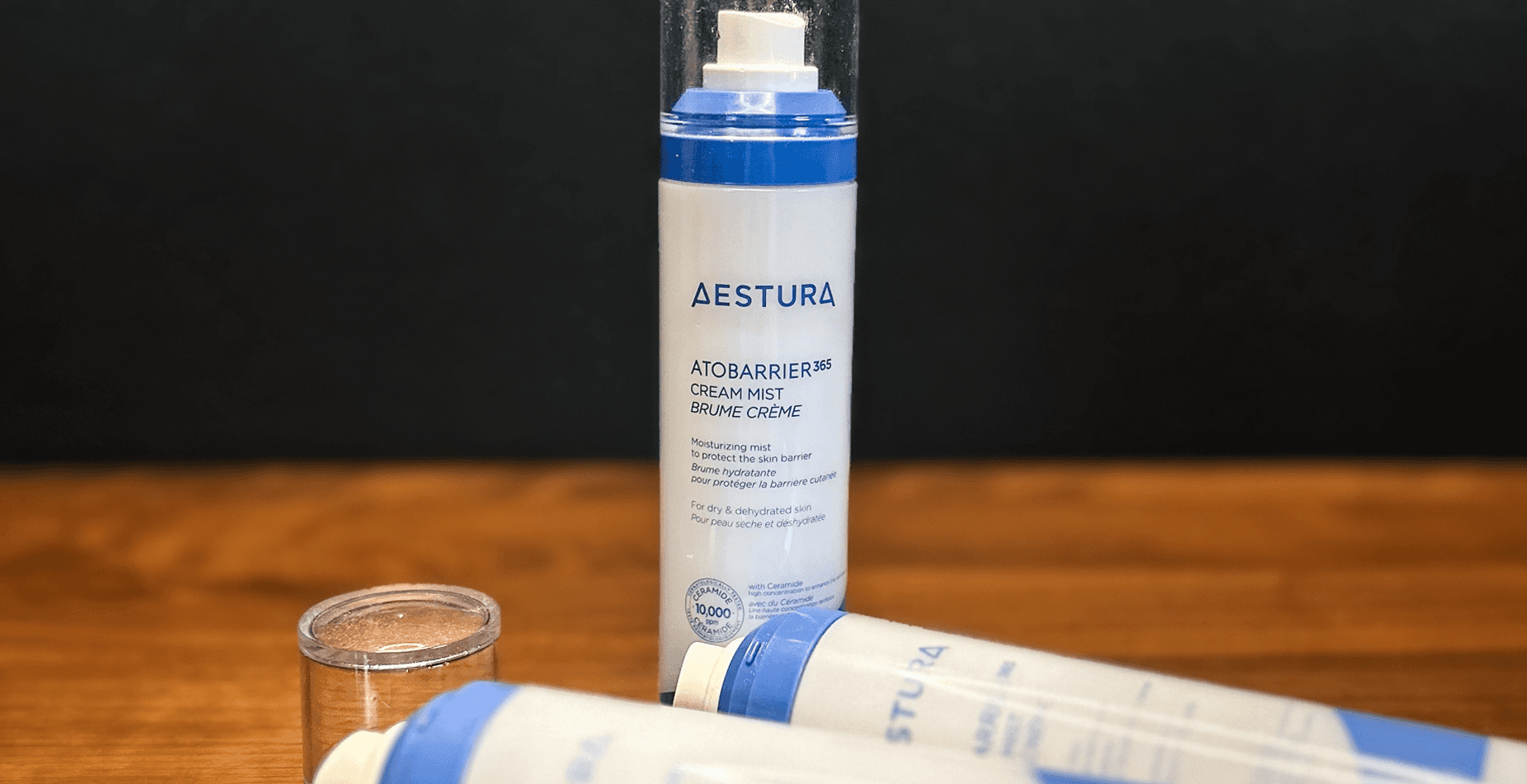
Aestura Barrier Mist (The "Bridge" – helps cream absorb into damp skin)
Medicube PDRN Serum (Thickens thinning skin & repairs DNA)
Beauty of Joseon Dynasty Cream (Long-lasting moisture & glow)
Skinfood Salmon Concealer (Color corrects dark undereye circles)
Kahi Balm (occlusive that prevents concealer creasing)
Beauty of Joseon SPF (sun protection)
The current PM lineup:
Beauty of Joseon Cleansing Balm or Round Lab 1025 Dokdo Cleansing Oil (Melts off SPF and makeup) Note: I use a balm for heavy evening-out makeup removal and an oil for everyday tinted moisturizer removal
Prequel Gleanser (Cleans skin without stripping moisture)
Acwell Licorice Toner (Prep & pH balance)
Anua Heartleaf 77% Toner (Pulls heat out of rosacea/flushed skin)
HaruHaru Black Rice Toner (Antioxidant and Hydration)
Timeless Matrixyl Synthe'6 (Stimulates collagen for firmness)
Aestura Barrier Mist (Protective ceramide buffer before Tretinoin)
Curology (tretinoin 0.07%, niacinamide 4% & dexpanthenol 1% for rapid cell turnover)
Volufiline (Stimulates lipid volume in eye hollows)
Aestura Atobarrier Cream (Rebuilds skin barrier overnight)
Kahi Balm (Locks in eye moisture)
Torriden Lip Essence (Hydrates Lips overnight)
Skin Cycling:
Once a week, I swap tretinoin for glycolic acid to exfoliate. Once a week, I swap for azelaic acid to keep rosacea in check. If I break out on my nose (usually from wearing glasses), I pull out Kate Somerville sulfur cleanser and use it as a mini mask. And if my skin ever feels on the verge of anger, I skip all the actives for a day, and focus on moisture and barrier repair.
Is this excessive? Probably.
Does my skin look better now than it did at 40? Absolutely.
But here's what I know now that I didn't know then: I'm doing something fundamentally different. I'm hydrating, not constantly exfoliating. I'm patient, not panicked. I'm strategic, not chaotic. That's not justification. That's actual learning.
The Difference Between "More" and "Effective"
Here's what I tell myself: this time is different because I understand what each product does.
Hydrating toners aren't actives. They're just different forms of water-binding ingredients (hyaluronic acid, glycerin, beta-glucan) that help my dry, 46-year-old skin hold onto moisture.
Ampoules are concentrated serums. I'm using them strategically, centella for inflammation, PDRN for collagen support, not randomly.
Peptides (Matrixyl Synthe'6) work on a different pathway than retinoids, so layering them makes sense.
Occlusives (like Kahi Balm) seal everything in, which matters when you're using tretinoin that can cause dryness.
This isn't the chaotic maximalism of 2020. This is... informed maximalism. Strategic layering. Evidence-based stacking.
Or at least, that's what I tell myself at 7 AM while patting seven different liquids into my face.
Here's what I've learned: the line between "too much" and "just enough" isn't the same for everyone. What matters is understanding the difference between hydration and irritation. Between strategic layering and throwing products at your face hoping something sticks.
What Actually Changed (And What Didn't)
Here's what's genuinely different about my routine now versus 2020:
What I do differently:
I wait for actives to absorb
I use hydrating layers, not multiple actives
I introduced products one at a time, over months, not days
I am consistent with what I use and when
I accept that my skin is sensitive and has mild rosacea, and I avoid triggers
What hasn't changed:
I still want results
I still buy and try products based on Reddit threads and TikTok reviews
I still struggle with the urge to add "just one more" serum
I still wonder if I'm overthinking this
My bathroom cabinet tells a story: there are at least a dozen partial bottles in there. Products that didn't work. Products I bought because they were hyped. Products that were fine but not quite right. Five years of trial and error condensed into a graveyard of half-full bottles.
The cost? I don't want to calculate it.
Founder's Note: The hard truth about skincare is that you can't outsource the learning curve. You can read every Reddit thread, watch every dermatologist on Youtube, and follow every K-beauty TikTok influencer, and you'll still have to figure out what works for your specific skin through trial and error. That process is expensive. It's time-consuming. And it's frustrating. But there's no shortcut.
What I Know Now (That I Wish I'd Known Then)
So here's where I land: I still rely on dysport and botox twice a year for fine lines and wrinkles. Fat loss and volume reduction are still real challenges. Some things can't be fixed with topicals, and that's okay.
But my skin is healthy and genuinely looks great for 46. Small pores. Smooth texture. Even tone. The things that can be addressed with a good routine.
Yes, my routine is 12 steps. But here's what those 12 steps actually are: 80% are hydration and barrier support (toners, ceramides, moisturizers and occlusives) the other 20% are targeted actives (like Tretinoin, Vitamin C or SPF).
When you break it down like that, it's not chaos. It's a system.
And here's where skincare parallels our philosophy on wardrobe: this isn't about accumulation. It's about curation.
Just like we reject the capsule wardrobe in favor of the collected wardrobe, I reject the idea that good skincare must be minimal. The capsule wardrobe says "own 33 pieces." The collected wardrobe says "own what serves a purpose and works together cohesively."
My 12-step routine isn't the skincare equivalent of fast fashion, buying every viral product. It's the collected approach. Each product has a specific function. Each layer builds on the one before it. Nothing is redundant. Nothing is there "just because."
The 2020 version of me was doing skincare fast fashion: buying everything, using it all at once, chasing trends, not understanding how things worked together.
The 2022 version of me was doing capsule skincare: restricting myself to the absolute minimum, feeling virtuous about deprivation, ignoring my skin's actual needs.
The 2026 version of me is doing collected skincare: curated over time, intentional, cohesive, built on understanding rather than rules.
Skincare at 46 is different than skincare at 40. My skin is drier. More sensitive. Less forgiving. The minimalist routine that worked beautifully at 43 doesn't cut it anymore. I need more hydration. More barrier support. More strategic intervention.
And I've learned to tell the difference between "need" and "want." I need tretinoin, SPF, and barrier repair. I want the ritual of three toners. Both can be true.
Founder's Note: Five years ago, I thought the goal was to find the "perfect routine" that would stop aging in its tracks. Now I know better. Skincare isn't static. What my skin needs changes with the seasons, with stress, with hormones, with age. The goal isn't perfection. The goal is understanding your skin well enough to adapt. And that's something you can actually achieve.
What I'd Tell My 2020 Self
If I could go back and talk to the version of me that was panic-buying The Ordinary's entire product line in April 2020, here's what I'd say:
1. Start with the boring stuff first. Get a good cleanser, a good moisturizer, and a good sunscreen. Master those before adding anything else. Boring works.
2. Introduce products one at a time. Give each new product at least two weeks before adding another one. You need to know what's working and what's causing problems.
3. Your skin barrier is not invincible. If your face stings when you apply products, that's not "activation", that's damage. Stop immediately.
4. Hydration and exfoliation are not the same thing. You can layer five hydrating toners and it's fine. You cannot layer five exfoliating acids without destroying your face.
5. The routine that works at 40 might not work at 45. And that's okay. Adjusting isn't failure. It's adaptation.
6. Tretinoin is the only ingredient with decades of research proving it works. Everything else is supplementary. Start there, but start slow.
7. You will waste money. Accept it now. Half the products you buy won't work for your skin. That's part of the process.
8. The answer is probably not in the next serum. It's in consistency, sunscreen, and patience.
But honestly? I don't think 2020 me would have listened. Some lessons you have to learn through trial and error. And a lot of empty bottles.
The Uncomfortable Truth
So where does this leave me? At 46, with a 12-step morning and evening routine that works.
My skin looks good. Better than it did at 40. I get compliments. I don't need a full-coverage foundation to feel confident. A dab of concealer and a tinted moisturizer will do. My texture is smooth. My tone is even.
B It's about understanding your skin well enough to know when it needs more and when it needs less. It's about being flexible enough to adjust as your skin changes, because it will change.
The products that genuinely make a difference are not negotiable: tretinoin, sunscreen, a good moisturizer with ceramides. Everything else is enhancement, not foundation.
But here's the thing: some of this is ritual. The act of caring for your skin, of taking time in the morning to layer products while your coffee brews, matters beyond the clinical efficacy of each individual step. There's value in the attention itself. That's not frivolous. That's self-care that actually feels caring.
At 46, with five years of trial and error behind me, I've found a routine that works for my skin right now. Next year, it will probably be different. And I'm okay with that because I've learned enough to adjust when I need to.
Shop My Routine
Some products mentioned are available through affiliate links below. I use every single one of these products and have for months or years.
Morning Routine:
Evening Routine:
Beauty of Joseon Radiance Cleansing Balm OR ROUND LAB 1025 Dokdo Cleansing Oil
Aestura Atobarrier Cream OR Illiyoon Ceramide Ato Concentrate Cream
Weekly Treatments:
Have thoughts on this? I'd love to hear from you. Find us on Instagram @aquietedit.co and tell us: are you team minimalist or team maximalist? Or are you stuck somewhere in the messy middle?
—
Affiliate Disclosure: We believe in transparency and only recommend products and services we genuinely use and love. Some links in this article may be affiliate links, meaning we may earn a small commission if you choose to purchase through them. This comes at no extra cost to you, and it helps us continue to provide curated, high-quality content for our community.
Behind the Edit
Filtering the noise so you don't have to. I use a no-nonsense lens to curate a 'collected' life for the woman who has outgrown the trend cycle.
Trending Edits



Stay up-to-date
Recent Edits
This week: We’re rejecting newness as a symbol of status. We’re choosing substance over marketing. And we’re building lives around what we actually own, wear, and read.

We explore the three defining shifts for the year ahead: the return of sculptural vintage hardware, the depth of "saturated earth" interiors, and why silence is the ultimate travel luxury.

A cute candle isn't always a good candle. After a Thanksgiving disaster involving a discount store find, we went on a hunt for a taper that wouldn't ruin the linens. Here is the reliable, no-drip option we now trust for every occasion.
This week: We are apologizing to our skin barrier, rejecting early New Year’s resolutions, and brewing a meadow in a cup.